|
We sell Honey Bees.
One NUC is $ 199.00 + Shipping. One bee hive with bees is $ 350.00 + Shipping. Package Bees are $ 109.99 per 2 lb and $ 139.99 per 3 lb package + Shipping Italian Queen Bees are 29.99 per each. We Also Supply Raw Honey, Propolis, Bee Wax and Bee Pollen in Various Amounts. Honey bees are one of the most well-known, popular and economically beneficial insects. For thousands of years, man has plundered honey bee colonies to get honey, bee larvae and beeswax. Now, honey bees are commonly kept in artificial hives throughout the United States. Although many people make a living from bees, most beekeepers are hobbyists who have only a few hives and who simply enjoy working with these fascinating insects. |
Our bees are raised on an organic farm with attention to detail being a must. If you are interested in pre-ordering your NUCs or bee hives please call us at 425 - 444 - 5461 . If we are unable to get to the phone, we are most likely in the bee yard, so leave a message and we`ll be happy to call you back. We also have 10 frame hives with bees. If you have a garden and would like to produce more fruits and veggies, bees will make the difference when it comes to pollination!!!
|
---------------------------------------------------------------------------------------------------------------------
Honey Bees
Honey bees are the only insects that produce food humans can eat. The most common of the honey bees is one that is found within Europe and Africa known as the Apis Mellifera Linnaeus honey bee. This type of honey bee is so popular and so good at making honey that it is now distributed worldwide. It was first introduced to other countries like America as early as the 1600’s by English and Spanish settlers. It became even more popular from 1859 to the early 1900’s when beekeepers began to actively import this type of honey bee.
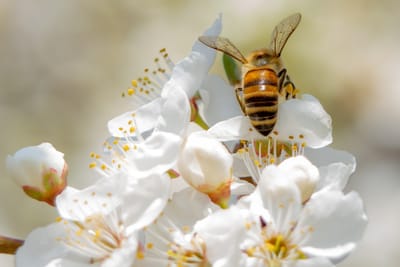
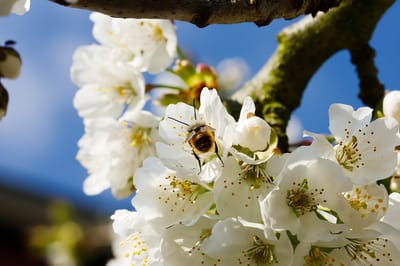
Honey bees in general are extremely important to the world as a whole. They are crucial pollinators in urban, natural and agricultural landscapes. Together they pollinate about 130 different types of fruit, vegetables, nut and fibre crops as well as ornamental crops. They not only improve the crop yield but allow for almost $15 billion dollars of profit worldwide in these particular areas. Hundreds of millions more are generated through the sale of hive products such as pollen, wax, honey, royal jelly and venom. |
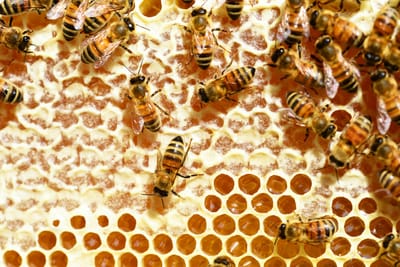
Honey bees live in colonies that consist of a single honey bee queen who is usually the mother of the other colony members. There are about 10,000 to 30,000 semi-sterile female workers and up to a few thousand males, also known as drones. The adult workers perform all of the different behavioral tasks associated with the keeping the colony from dying out. The worker honey bees perform the phenomenon spreading as well as other working tasks to make the honey. When the honey bees come out of their cells as adults they start to clean them and as they age they are able to feed the larvae, process and store food, secrete wax, construct the combs, and guard the entrance to keep out predators. As early as three weeks old they start foraging for nectar and continue to do this until they die. The life expectance of a honey bee differs along with many factors such as the social structure of the colony, the environment in which they forage and what type of year it is to name a few things.
Some interesting facts about honeybees include the fact that they have five eyes. They fly about 20 mph and have six legs because they are technically considered to be insects. It is also true that when a bee loses its stinger it will cause the bee to die. In all total honey bees have been around over 30 million years according to some ancient documents. A typical beehive can hold up to 50,000 bees at one time, and the honey bees within one hive must collect nectar from about 2 million flowers to make only one pound of honey. In fact, the average forager only makes about 1/12th of a teaspoon of honey in their entire lifetime, which is why we need so many bees in this world. Obviously, for this reason and so many more, honeybees are essential to have around and bring us so much of the wonderful things in the world such as flowers and honey. |
Honey bees, like ants, termites and some wasps, are social insects. Unlike ants and wasps, bees are vegetarians; their protein comes from pollen and their carbohydrate comes from honey which they make from nectar. Social insects live together in groups, cooperate in foraging tasks and the care of young, and have different types, or "castes," of individuals. There are three castes of honey bees
Workers- Reproductively underdeveloped females that do all the work of the colony. A colony may have 2,000 to 60,000 workers.
Queen - A fully fertile female specialized for producing eggs. When a queen dies or is lost, workers select a few young worker larvae and feed them a special food called "royal jelly." These special larvae develop into queens. Therefore, the only difference between workers and queens is the quality of the larval diet. There is usually only one queen per colony. The queen also affects the colony by producing chemicals called "pheromones" that regulate the behavior of other bees.
Drones - Male bees. A colony may have 0 to 500 drones during spring and summer. Drones fly from the hive and mate in the air with queens from other colonies.
Newly emerged workers begin working almost immediately. As they age, workers do the following tasks in this sequence: clean cells, circulate air with their wings, feed larvae, practice flying, receive pollen and nectar from foragers, guard hive entrance and forage.
Unlike colonies of social wasps and bumble bees, honey bee colonies live year after year. Therefore, most activity in a bee colony is aimed at surviving the next winter.
During winter, bees cluster in a tight ball. In January, the queen starts laying eggs in the center of the nest. Because stored honey and pollen are used to feed these larvae, colony stores may fall dangerously low in late winter when brood production has started but plants are not yet producing nectar or pollen. When spring "nectar flows" begin, bee populations grow rapidly. |


